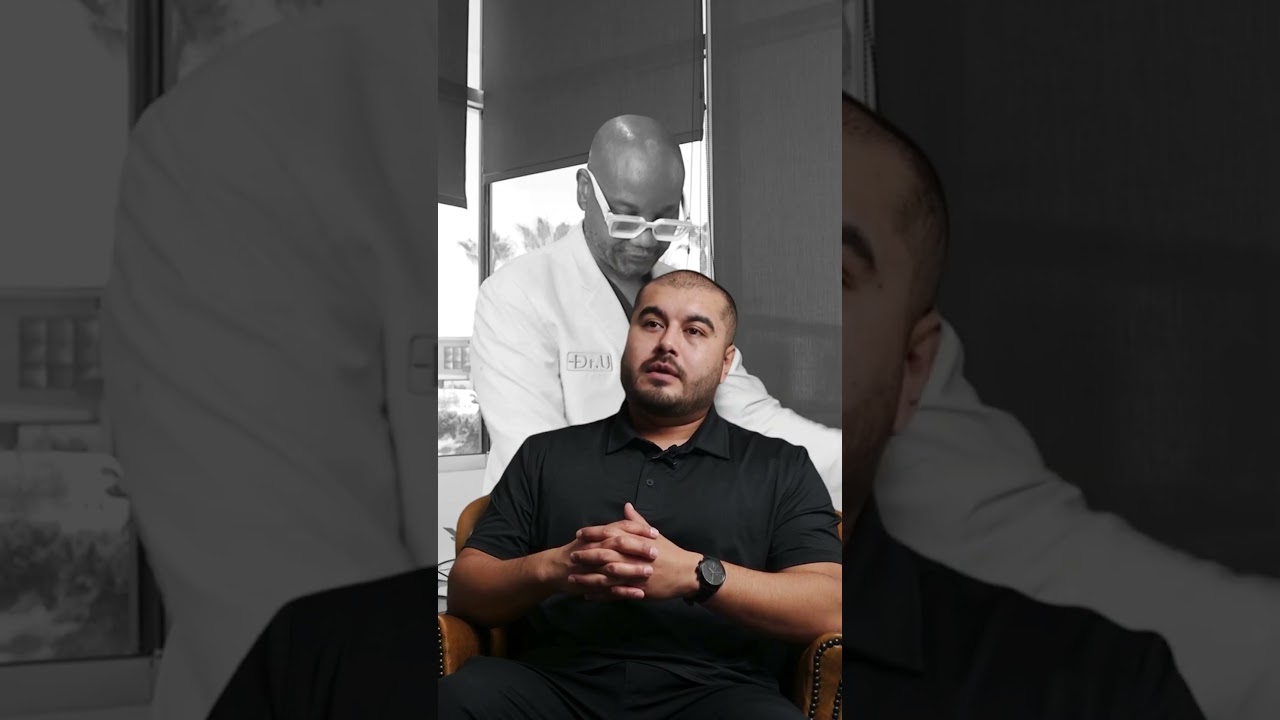
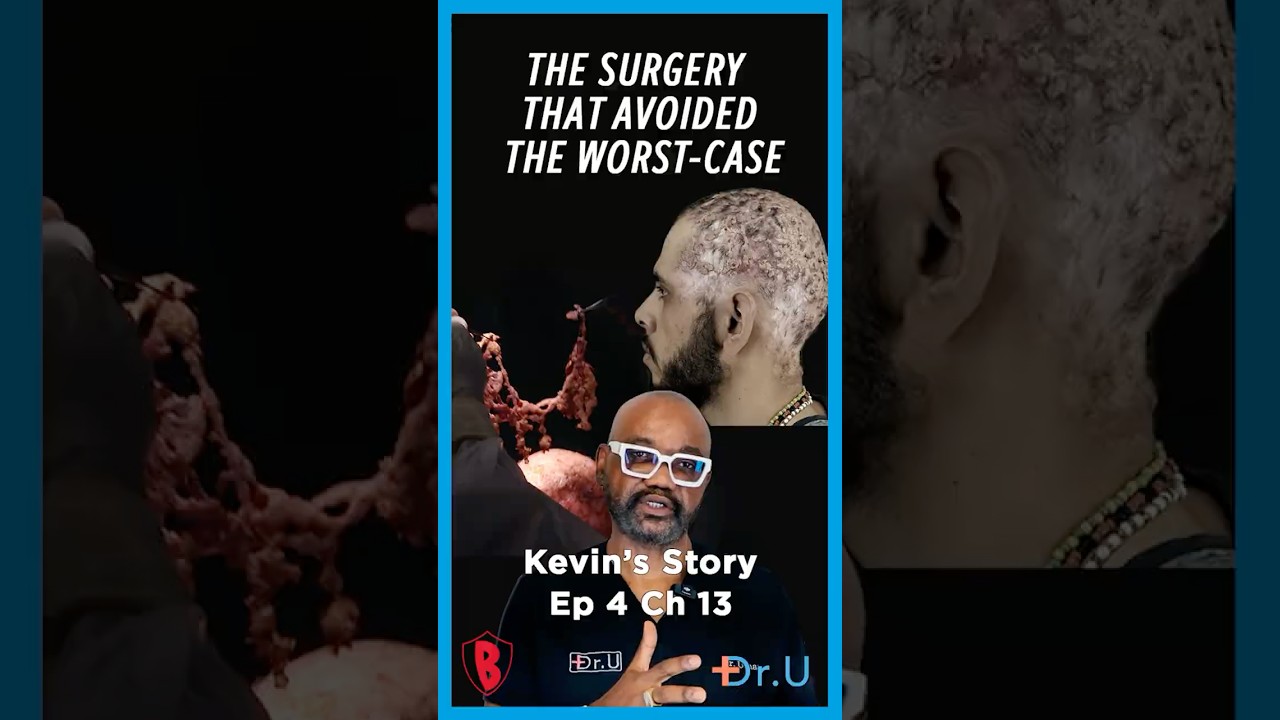
Dissecting Cellulitis: A Long-Term Plan Before Scalp Surgery Could Kevin Avoid Total Scalp Excision? Dr. U Reassesses Episode 4, Chapter 9 of Bumpinator follows Kevin at a critical three-month review. His dissecting cellulitis had been severe enough that Sanusi Umar, MD, Dr. U, had previously considered total scalp excision. Before committing Kevin to that path, Dr. U chose to try a treatment regimen, observe the response, and bring him back for a decision grounded in evidence rather than urgency. At the opening of this chapter, Kevin’s use of Gashee is discussed. As the product dries, the clip shows surface skin beginning to shed. That visible change is important, but it is not treated as proof of a final outcome. Dr. U is evaluating the full clinical picture to decide whether the progress supports a more measured course or whether a definitive procedure may still be warranted. Dr. U explains that his approach comes from years of treating dissecting cellulitis and related forms of scarring alopecia. These conditions can require long-term or lifelong management. That reality changes how a physician should judge a medication. The question is not only whether it can suppress disease activity in the short term. The question is whether the patient can reasonably continue it without the treatment creating a second problem. That is why Dr. U says he tries to avoid powerful immunosuppressants, particularly heavy steroid use, as much as the individual case allows. The point is not that steroids never have a role. The point is that side effects can force a medication to stop. For a condition that may demand sustained care, intensity alone does not create a durable plan. The leadership in this chapter is visible in Dr. U’s restraint. He had already considered the major surgical option. He did not minimize Kevin’s disease, and he did not promise that surgery was no longer necessary. Instead, he created a monitored treatment window, assessed what changed, and kept the next decision tied to Kevin’s actual response. This is also why Kevin’s follow-up matters. The chapter is not a final reveal. It is the point where progress, risk, and long-term feasibility have to be weighed together. The next step will depend on what Dr. U sees and whether the current approach is doing enough to justify continuing it. This is one patient’s experience. This is not medical advice. Results can vary. Evaluation matters, and treatment for dissecting cellulitis, scarring alopecia, or hidradenitis suppurativa should be individualized and physician-led. What would you want Dr. U to weigh most heavily before deciding whether Kevin still needs total scalp excision? Agree/Disagree: a long-term scarring alopecia plan should be judged by sustainability, not just intensity. Subscribe, the next chapter answers what happens next. 00:00 Trying treatment before a definitive procedure 00:19 Gashee dries and surface skin begins to shed 00:24 How dissecting cellulitis shaped Dr. U’s approach 00:41 Trying to avoid total scalp excision 00:52 Why Dr. U limits powerful immunosuppressants 01:02 Steroids and long-term side effects 01:06 Choosing a sustainable treatment plan 01:20 When treatment side effects force a stop dissecting cellulitis, scarring alopecia, long-term scalp treatment, Dr. U, hidradenitis suppurativa